Knowledge Base
Impact of Wind Farms on Environment and Ecology
13 min read
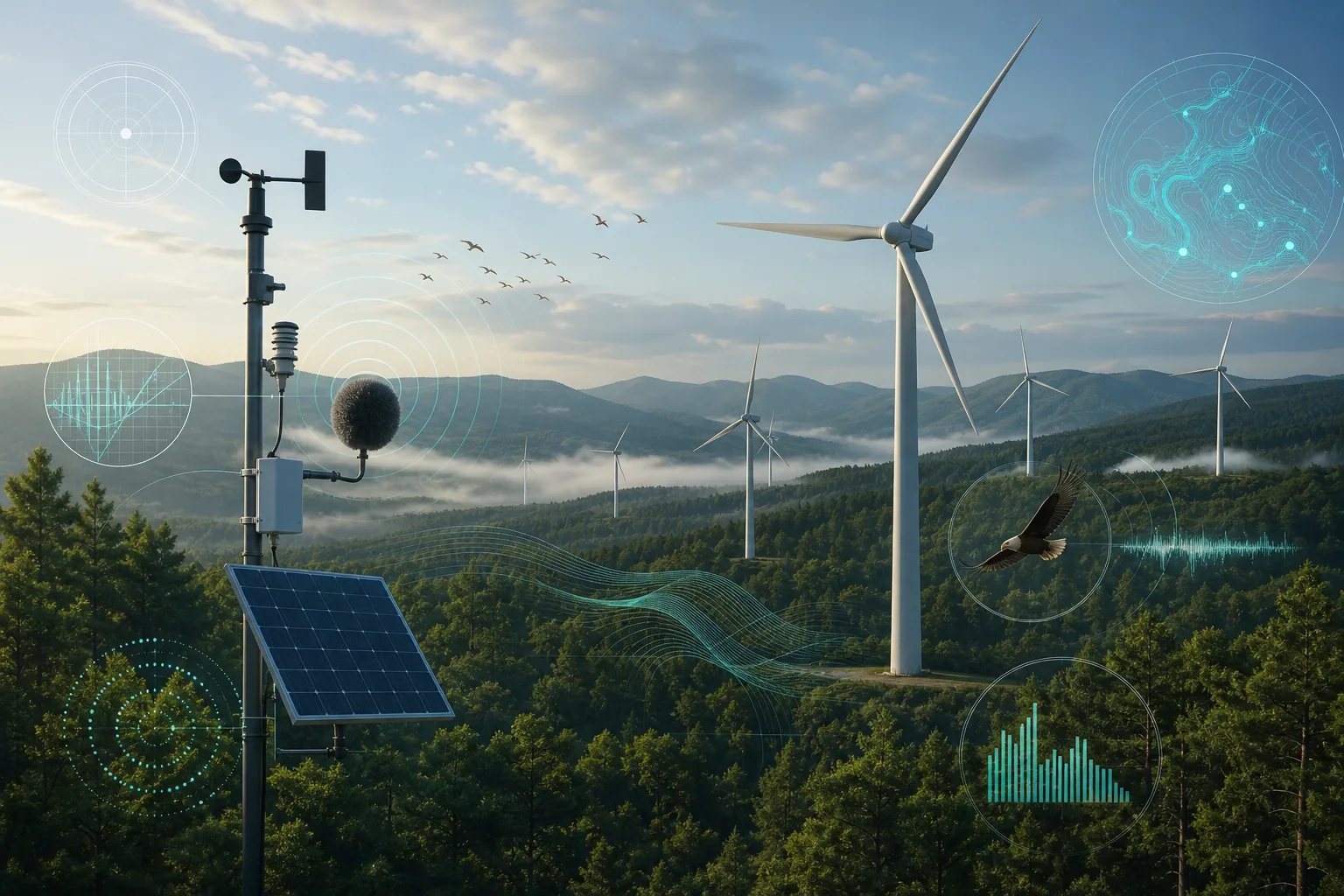
On the backdrop of increasing use of wind as an inexhaustible source of environmentally clean energy, discussions on environmental aspects of renewable energy sources and their impact on the environment are gaining momentum.
Our specialists have answered some of the most popular questions about the impact of wind farms on the environment, living organisms, and human health.
# ... (continued translation for each tab)
death of birds and bats. In reality, wind turbines become the cause of bird and bat deaths. However, numerous studies show that the share of bird deaths from WE is sufficiently small compared to other sources related to human activity, such as vehicles and buildings or natural predators. It should also be noted that during project implementation an environmental impact assessment is conducted, which assesses migration routes and habitats of birds. In case it is found during the research that there is a negative impact, the project will not be implemented. Secondly, at the legislative level in most countries, construction of wind turbines on bird migration paths is prohibited. Their share in protecting birds from WE are also manufacturers of turbines who install special devices for scaring off birds (the norm may be included during the development of OVOS) or sensors that determine the approach of birds, which can stop WE.
impact on living and plant world. During the development of OVOS it is determined whether there are habitats of animals, plants including those included in the Red Book or protected by legislation. Based on available information, a construction site is chosen with the aim to minimize impact or deeming project implementation impossible at the selected area.
noise pollution. Wind energy installations have noise pollution effects on the environment. For example, noise impact from WE at hub height ranges from 90 to 110 dB(A) depending on wind speed. However, in all countries there are norms for noise impact in residential and other buildings. Therefore, during the development of pre-project and environmental documentation the factor of noise impact is taken into account and construction sites are determined so that noise pollution norms are observed. Also at the legislative level in some countries there is a minimum distance from residential areas to wind energy installations (or their elements) and places where installation of wind turbines is prohibited, which also contributes to reducing noise impact.
generation of waste and waste. During the construction of WE and operation there are generated wastes. But modern methods of handling wastes and regulatory requirements minimize their influence on the environment. For example, technical fluids used at wind turbine in accordance with legislation are sent for appropriate disposal or recycling; lead-acid batteries are handed over to specialized companies.
утилизация компонентов ВЭУ. After the end of a wind turbine's service life, it must be decommissioned. However, decommissioning is an expensive stage as it requires dismantling the WEU into its components, which require the use of lifting mechanisms (cranes) that were used for installing the WEU. In addition to the demolition of the installation, there will also be a need to break down main elements into smaller ones, which are accepted for decommissioning or burial.
воздействие на почву. This factor can only be attributed during construction works, such as preparing the site and access roads where excavation, embankment, compaction, loosening of soil, construction of structures, rearrangement of communications, creation of construction sites, and cutting off fertile soil layers under construction areas occur. During WEU operation, impact on the soil is not predicted.
Is it true that wind turb
From the perspective of the impact of wind turbines on human health, the following factors can be distinguished:
- шумовое загрязнение. Wind energy installations cause noise pollution. However, at the same time, in all countries there are norms for sound impact on residential and other buildings. Therefore, during the development of pre-project documentation and environmental assessments, these factors must be taken into account.
How noisy are wind turbines?
The noise impact from WTs at hub height ranges from 90 to 110 dB(A) depending on the wind speed. However, it should be noted that with increasing distance from WTs and closer to the ground, the noise subsides.
What do wind turbine manufacturers do to reduce noise from WEUs?
The development of technologies in the design and creation of wind farms has allowed manufacturers to reduce noise emissions from wind turbines. Improved WEU construction significantly reduced mechanical component noise, and the development of aerodynamic blade profiles reduced airflow interaction noise.
Do wind farms affect air quality?
When operating a wind farm, the release of pollutants into the environment does not occur. Emissions of pollutants to the atmosphere can only happen during the movement of vehicles during the installation of a wind farm and workers servicing WEUs. However, these emissions are negligible, for example, in the process of developing an EIA report specialists from the company conducted calculations of pollutant emissions from vehicles and their value was 0.192 tons/year.
Is it true that wind farms distort TV and radio signals?
Wind turbines can create interference with aviation radar and telecommunication systems. During the development of preliminary documentation, a request is always made to the relevant authorities responsible for assessing this impact, who issue an opinion or permission for building WEUs in the chosen location.
How much land is needed for a wind farm?
First, the area of the land plot required for building WEUs depends heavily on the geometric dimensions of WEU. Secondly, the necessary land area can be divided into two types:
- in permanent use for placing WEUs, parking and turning areas for vehicles, ground engineering objects, and access roads;
- temporary use for storing elements of WEU and turbine assembly.
At the same time, during the development of preliminary documentation, required land areas are analyzed throughout the project implementation. Also, depending on the country's legislation where the object is being implemented, it is often recommended to take a land plot used for placing cranes in permanent use or have the possibility of its use, as at large repairs may require using a crane.
Based on the company's experience in implementing wind energy projects for installations with a total height of up to 130 m, it is recommended to use land no smaller than 40x60 m.
How much do greenhouse gas emissions decrease by using wind turbines?
The reduction in greenhouse gas emissions depends on the amount of electricity produced and the average quantity of conditional fuel consumed per unit of electricity generated in a country where the wind installation is located.
For example, for the Republic of Belarus, producing 1 kWh of electricity from WEU reduces greenhouse gas emissions by 0.296 kg given certain parameters.
If you have any questions, please write to us at info@ecotek.pro, and our specialists will answer them.
Is it true that wind turb - From a health perspective, one can consider the following factors regarding the influence of wind installations:
- Noise pollution. Wind energy installations cause noise pollution. However, in all countries there are norms for sound impact on residential and other buildings. Therefore, when developing pre-project and environmental documentation, the factor of noise impact is taken into account and construction sites are determined so that these norms are observed. Also, in some countries, there is a legislative minimum distance from housing to wind energy installations (or their elements) and places where installation of wind turbines is prohibited, which also contributes to reducing noise pollution.
- Flicker effect. This effect consists of the fact that when the blades rotate in a circle and come into contact with sunlight, shading occurs on the ground at a certain frequency. This impact will be similar to periodic turning on and off of light with high frequency, which is harmful for people suffering from epilepsy. Therefore, this factor is taken into account when developing project documentation and its impact is minimized by removing wind turbines from residential areas. For example, in some wind farms a mechanism has been implemented that stops the WEU during periods of flicker observed in places where people live.
How noisy are wind installations?
The noise impact from WEUs at hub height is between 90 and 110 dB(A) depending on the wind speed. However, it should be taken into account that with increasing distance from WEU and closer to the ground the noise subsides.
What do manufacturers do to reduce the noise of WEUs?
The development of technologies in the field of designing and creating wind energy installations has allowed manufacturers to reduce the noise from wind turbines. Improved design of WEU significantly reduced mechanical components' noise, and the development of aerodynamic blade profiles reduced the noise interaction with air.
Do wind installations affect air quality?During operation of a wind energy installation, there is no release of pollutants into the environment. Emission of pollutants to the atmosphere is possible only during the movement of ground transportation during the assembly of WEU and by workers servicing it. However, these emissions are insignificant, for example, in the process of developing an EIS specialists from the company performed a calculation of emissions of polluting substances from road traffic and their value was 0.000192 tons/year.
Is it true that wind installations distort TV and radio signals?
Wind turbines can cause interference with aviation radar and telecommunication systems. In connection with the presence of interference, when developing pre-project documentation, a request is always made to the relevant authorities responsible for assessing this impact and issuing an opinion/permit on wind energy facility construction at the chosen location.
How much land do you need for a wind farm?
Firstly, the area of the land plot required for constructing a WEU depends heavily on the geometric dimensions of the WEU. Secondly, the necessary land plot can be divided into two types:
- in permanent use for placing WEUs, parking and turning areas for transportation, ground engineering objects, and access roads;
- for temporary use for storing elements of the WEU and assembling turbines.
At the same time, during the development of pre-project documentation, required land plots are analyzed throughout the project implementation. Also, depending on the legislation of the country where the object is being implemented, it is often recommended to take a crane area in permanent use or have the possibility of its use, as large repairs may require the use of a crane.
Based on our company's experience in implementing projects in wind energy within the region for WEUs with a total height up to 130 m, it is recommended to use a land plot not less than 40x60 m.
How much do greenhouse gas emissions decrease by using wind turbines?
The reduction of greenhouse gas emissions depends on the amount of electricity produced and the average amount of conditional fuel consumed per unit of produced electricity in the country where the WEU is located.
For example, for the Republic of Belarus, the production of 1 kWh of electricity from a WEU reduces greenhouse gas emissions by 0.296 kg given certain parameters.
If you have any questions - write to us at info@ecotek.pro and our specialists will advise on all issues.
-->Share: