Construction
Full-cycle wind farm construction: from pre-project documentation to equipment installation and commissioning.
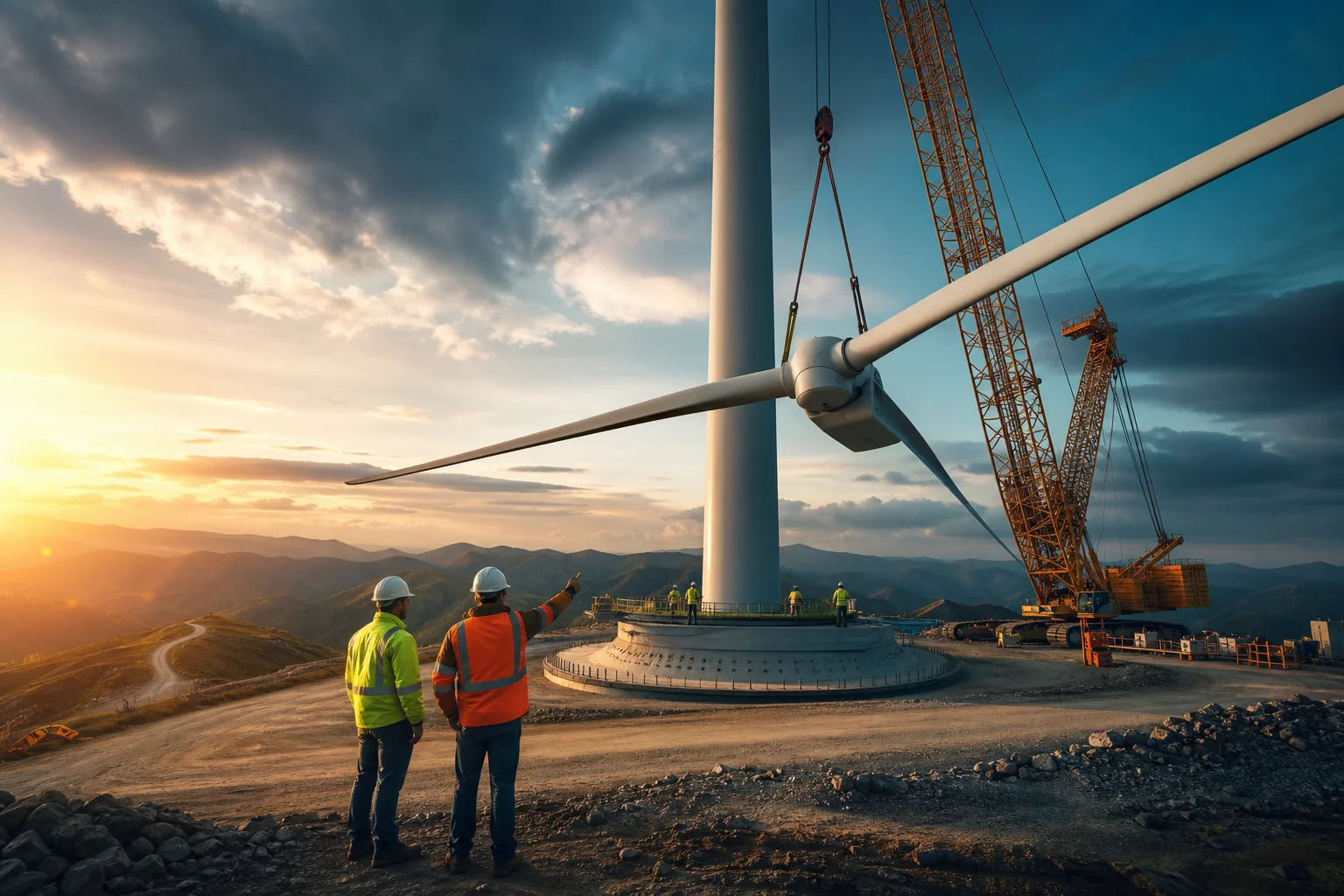
We offer a full range of wind turbine construction services: from pre-project documentation development to equipment installation and facility commissioning.
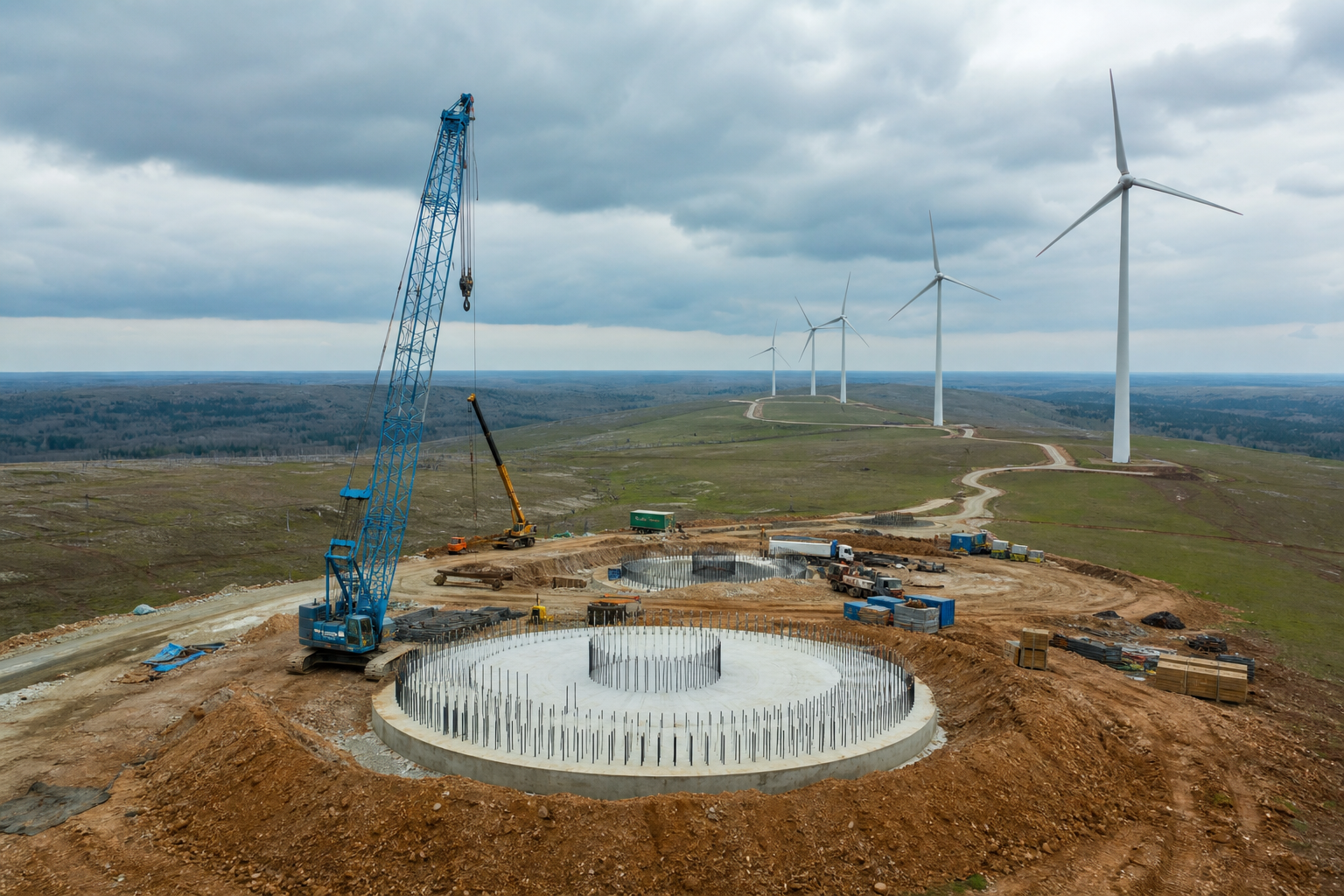
1. Support of Design and Survey Work
This service can be expressed both in the selection of specialized design and survey companies and in full support of the design process: from pre-project documentation development to obtaining a positive expert review of the project.
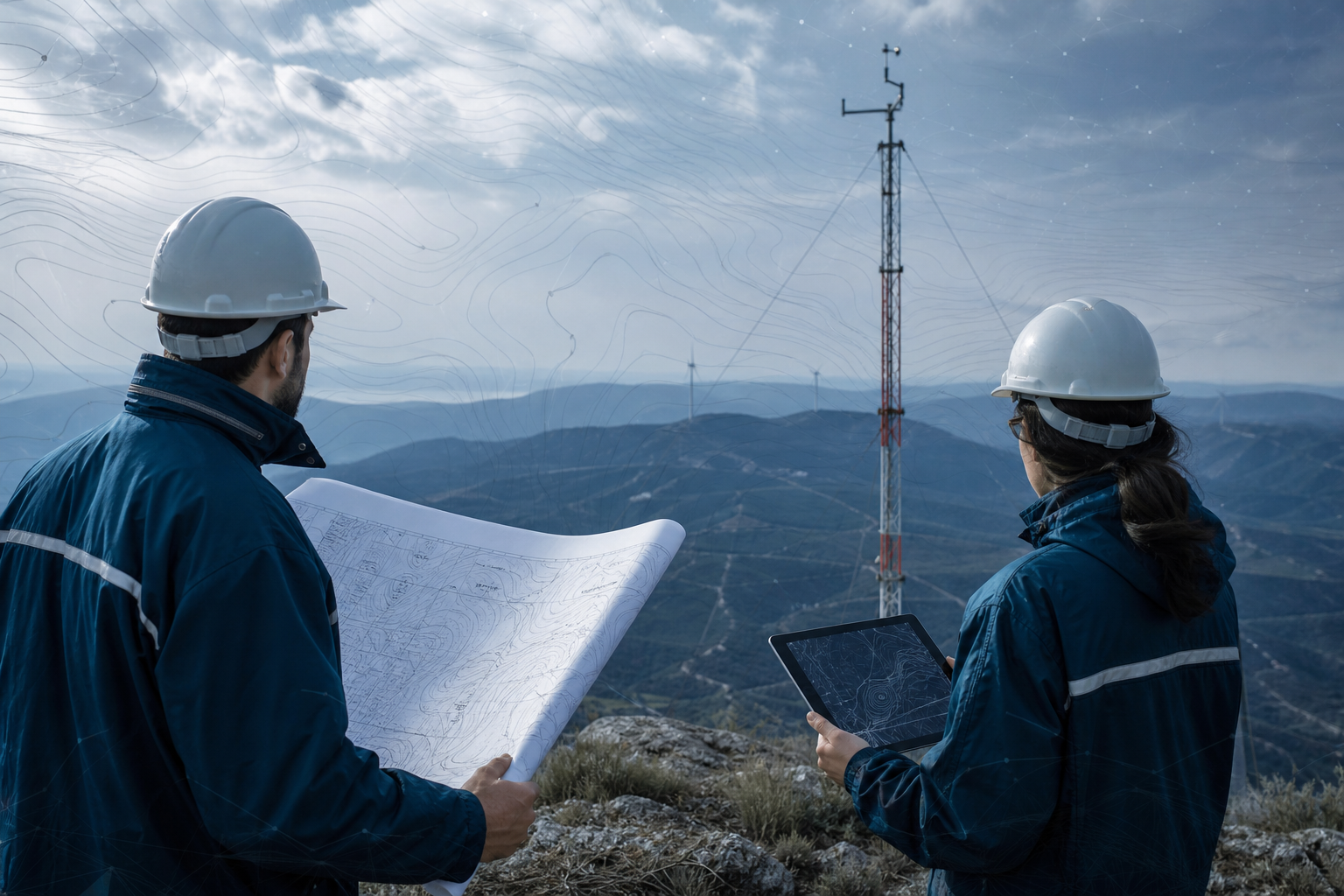
2. Support of Construction Work on Site
Support of construction work is aimed at providing consulting services during construction and installation work, including: pit preparation, rebar tying, foundation pouring, utility laying, foundation ring installation.
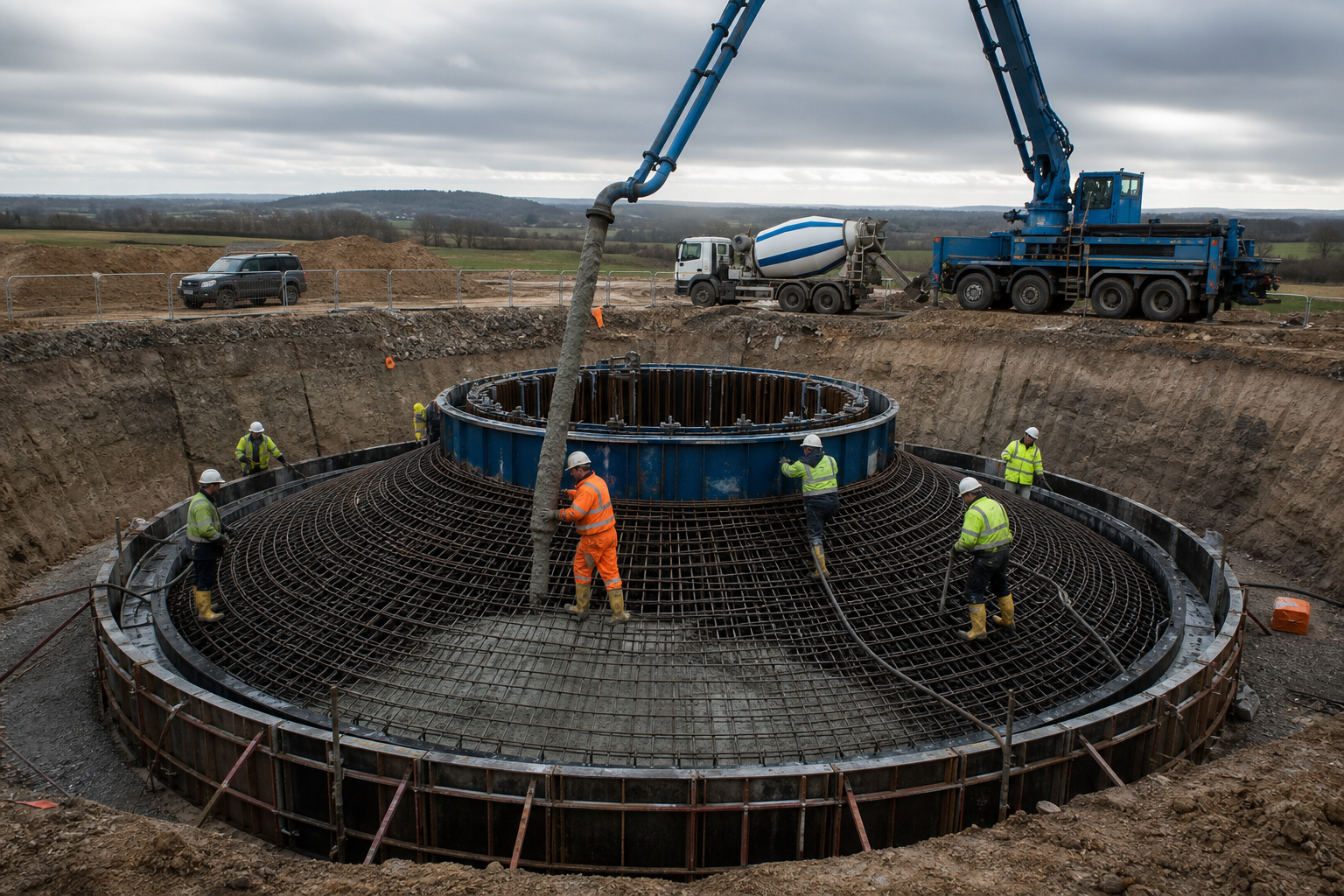
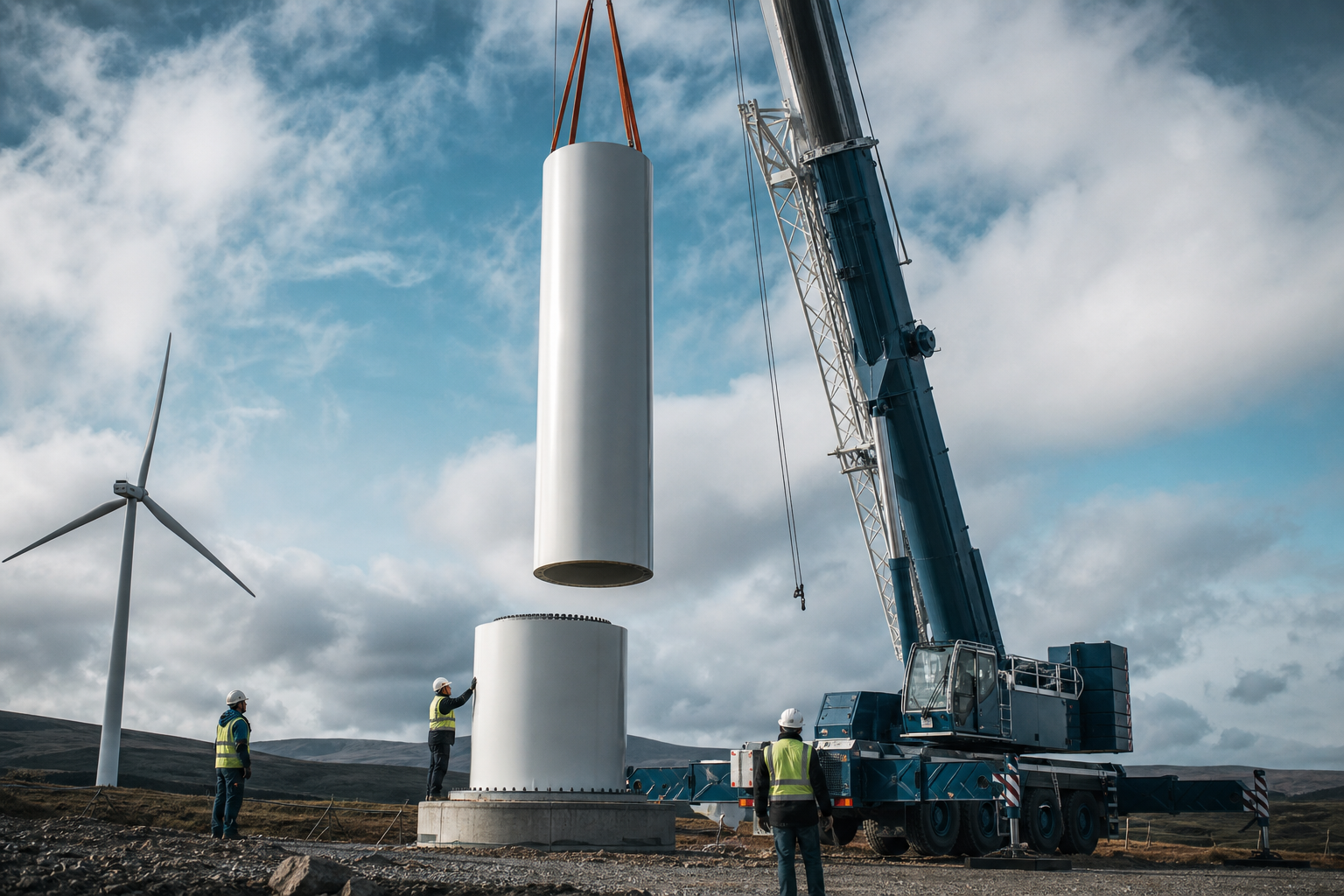
3. WTG Installation
After the foundation gains the required strength, the installation phase begins: installation of tower sections, tightening of bolt connections, lifting and securing the nacelle, generator, rotor, laying of power and information cables, installation of internal cabinets and equipment.
4. Commissioning Works
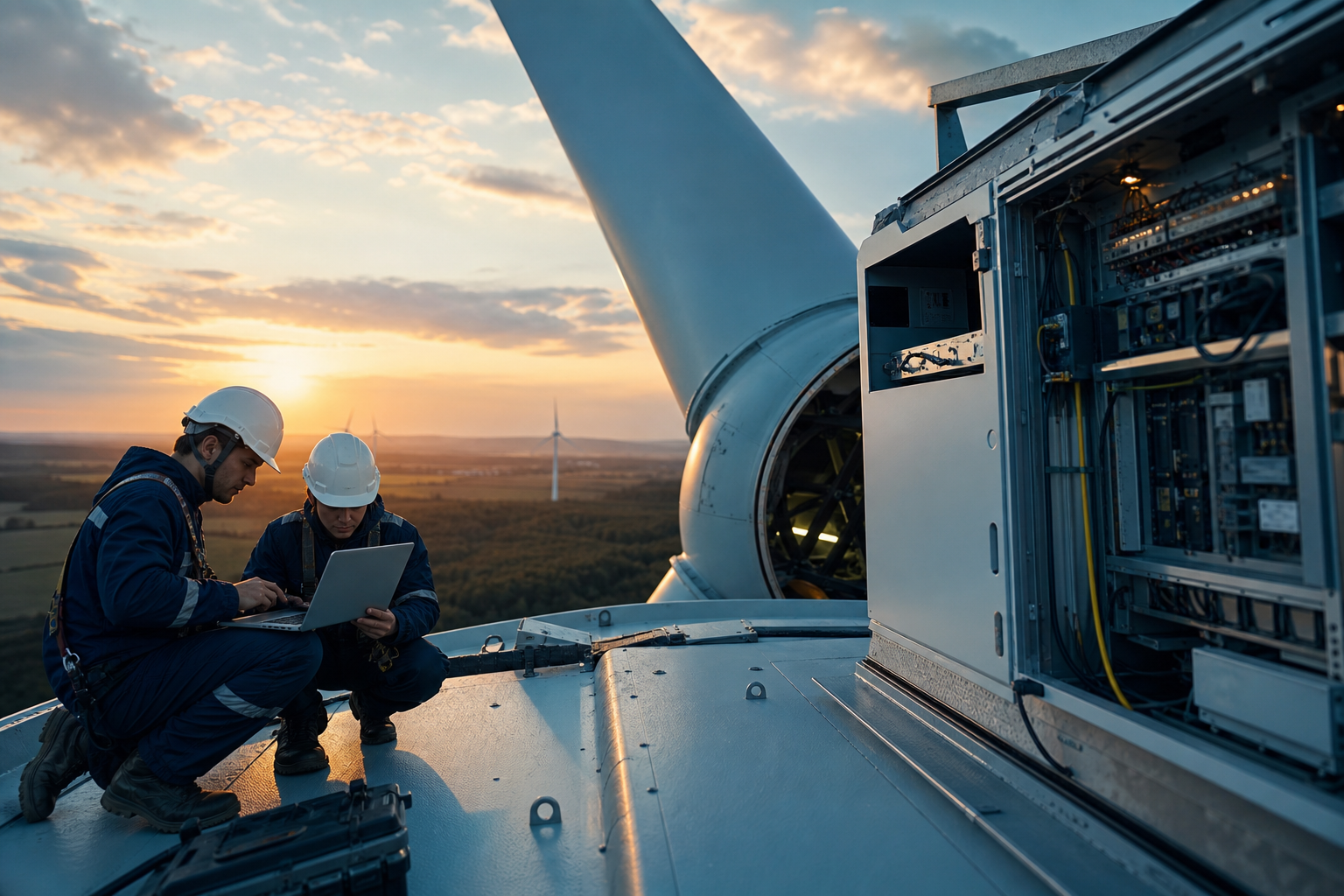
The commissioning phase includes: checking compliance of technical parameters with project requirements, trial runs for checking functionality, adjustment and setting up equipment interaction, comprehensive testing and equipment trials.
We carry out wind farm construction throughout Belarus, Kazakhstan, and Russia. Contact us at +375 (29) 747-07-09.
Frequently Asked Questions
What is the warranty period and service life of new wind turbines?+
Manufacturers and certification companies typically specify a guaranteed service life of 20-25 years. However, market requirements for turbines, new design methods, and the development of wind energy technology are leading to an extension of the regulated service life of wind generators. For example, General Electric's turbine manufacturer received an international certificate with a guaranteed service life of 40 years.
The advantages of used wind installations include cost savings on initial investment and the ability to repurpose existi+
The most significant advantage of using second-hand wind turbines in the construction of wind farms and wind parks is their price. For example, based on market monitoring of used Enercon wind turbines with a capacity of over 1 MW, the average cost per turbine is $132.5/kW, while the cost of new ones is around $900-1000/kW.
What stages are involved in building a WEU?+
In implementing wind energy installation projects, the following main stages are distinguished: preliminary stage (screening sites, obtaining permissions, wind measurements, turbine selection, land plot, development of documentation, expert review), design stage (development of project documentation, expert review), construction and assembly works (delivery, foundation construction, assembly, commissioning work, putting into operation).
How long will it take to implement the project for constructing a wind farm?+
The timeline for implementing the project largely depends on the capacity of the wind farm and the number of WTGs (Wind Turbine Generators). For projects with a capacity up to 50 MW, the implementation period is typically 2-3 years. For projects exceeding e 50 MW, the implementation period can be 3-5 years.
Which stage is the longest?+
The longest phase in implementing a project is the pre-project stage. Since it includes time-consuming tasks such as research works to determine the wind potential of construction sites for WEUs and obtaining land plots.
Which stage of construction is the most expensive?+
The cost of a turbine accounts for about 70% of the total capital expenditures on implementing wind energy projects, so purchasing WEU is the most expensive stage.
How much electrical energy can a wind turbine generate?+
As a criterion for assessing the efficiency of renewable energy sources, the capacity factor (CF) is used. For example, in 2021 the global CF for onshore wind turbines was 39%, therefore a wind turbine with a power rating of 1 MW will be able to produce 3416 kWh/year of electrical energy.
What is the payback period for wind turbines?+
The energy payback period of modern wind energy installations typically ranges from 6 months to 1 year. The duration heavily depends on the wind potential of the site where the turbine is installed.
Wind turbines operate within a range of wind speeds.+
Modern wind energy installations start working at a wind speed of 3 to 4 m/s and reach maximum output power approximately at 11-12 m/s. At very high wind speeds, wind turbines are stopped.
Where does the energy from a wind turbine go?+
Wind turbines can be divided into three types depending on the use of electricity: for selling electrical energy to the power grid, for using electricity for own needs, combined (for own needs with sale of surplus to the network).
Wind turbine self-orientates to the wind or is installed in a specific position?+
In light of the fact that wind has a variable direction both throughout the day and across seasons, the wind energy installation orients itself to the wind with the help of a yaw system for more efficient use of wind potential.