Knowledge Base
The largest solar power stations in the world
7 min read
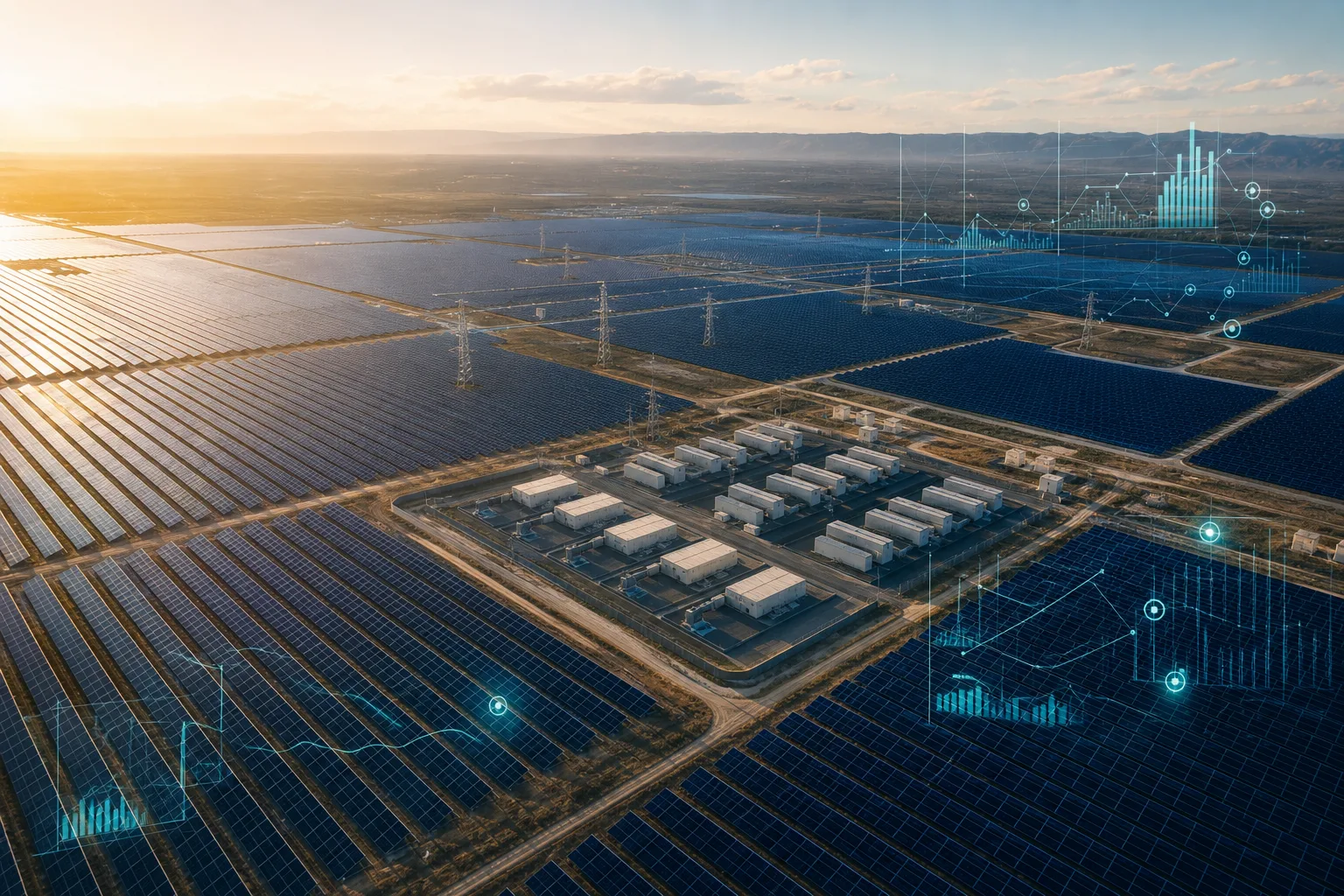
Many countries around the world are increasing their use of renewable energy sources through solar power. The development of efficient photovoltaic panels and reduction in capital costs for implementing projects in the field of solar stations allows realizing projects on a massive scale. This article presents the largest photovoltaic power plants in the world.
Bhadla Solar Park (Solar Park Bhadla)

Location: India, Bhadla, Jodhpur district, Rajasthan.
Power: 2245 MW (AC).
Commissioning date: March 20, 2020.
Construction cost: $2.175 billion USD.
Bhadla Solar Park is a solar power plant located in the Thar Desert, India . The photovoltaic station covers an area of 56 square kilometers and has a total installed capacity of 2245 MW, making it the world's largest solar park as of 2023. To create such a park, over 10 million photovoltaic panels were used.
The park was developed in four stages from 2015:
-
Phase 1 included the construction of 420 MW;
-
Phase 2 – construction of about 250 MW;
-
Phase 3 included the construction of over 500 MW,
-
Phase 4 – construction of a solar power station with more than 900 MW.

Photovoltaic station Bhadla (satellite view)
The Bhadla Solar Park is one of the projects under India's National Solar Mission, which involves setting up 100 gigawatts (GW) of photovoltaic power stations. According to a World Bank study, the park has many benefits for the local economy and environment, such as creating about 10,000 direct and indirect jobs during construction and operation, and improving the quality and reliability of electricity supply in the region.
Golmud Solar Park (Solar Park Golmud)

Location: China, Qinghai province, Golmud.
Power: 2200 MW (AC).
Commissioning date: October 2020.
Construction cost: about $2.2 billion USD.
Huanghe Hydropower Development built a solar park with a capacity of 2.2 GW in northwest China. The photovoltaic station is equipped with an energy storage system from Sungrow, with a power output of 202.9 MW (capacity of the system 202.9 MWh).Also, the project includes a transmission line with a voltage of 800 kV and a length of almost 1600 km for transmitting electricity to eastern China. The solar park is just part of a planned complex of renewable energy sources with a capacity of 16 GW, which will include 10 GW photovoltaic stations, 5 GW wind farms, and 1 GW concentrated solar power station.
Pavagada Solar Park (Solar Park Pavagada)

Location: India, state of Karnataka, district Tumkur, Pavagada Taluk
Installed capacity: 2050 MW (AC/DC)
Commissioning date: January 2018
Construction cost: about $2.1 billion USD
Pavagada Solar Park is a solar park covering an area of 53 square kilometers in the state of Karnataka, India. Completed at the end of 2018, the park has a capacity of 2050 MW. As of today, it is the third-largest photovoltaic station in the world and the second largest in India.

In implementing the project, a model of "connect and work" was used. According to this model, Karnataka Solar Power Development Corporation Ltd (established by the Indian government) acquires land parcels, obtains all necessary permissions from the government for solar energy production, and then signs contracts with solar power developers through auctions. For example, the first companies that signed agreements were:
- Parampujya Solar Energy Pvt Ltd. – 100 MW for construction.
- Fortum Finnsurya Energy Pvt Ltd. = 100 MW for construction.
- ACME Solar Holdings Pvt Ltd. = 100 MW for construction.
- Tata Power Renewable Energy Ltd = 100 MW for construction.
- Yarrow Infrastructure = 50 MW for construction.
- Renew Power = 50 MW for construction.
Benban Solar Park (Solar Park Benban)

Location: Egypt, Benban, Aswan Governorate (desert).
Installed capacity: 1650 MW (1.65 GW).
Commissioning date: 2019
Investment in the project: more than $4 billion.
As part of Egypt's strategy for sustainable energy, a plan was developed to build a photovoltaic station by 2035. Based on satellite imagery and NASA meteorological observations, an optimal site for the solar park construction was chosen.
The Benban Solar Park is located on a land area of about 37.2 km², which is divided into 41 separate plots, arranged in 4 rows, each of which was provided to different companies for the construction of photovoltaic panels.

Tengger Desert Solar Park (Solar Park of the Tengger Desert)

Location: China, Zhongwei, Ningxia,
Installed capacity: 1.547 MW
Commissioning year: 2015.
Investments in the project amount to more than 2.2 billion dollars.
Located in an open desert area of about 43 square kilometers and provides electricity for over 600,000 homes. The Tengger Desert Solar Park ranks 5th in the world by installed capacity.

Share: