Knowledge Base
Marine Wind Energy: Cost of Construction and Efficiency
5 min read
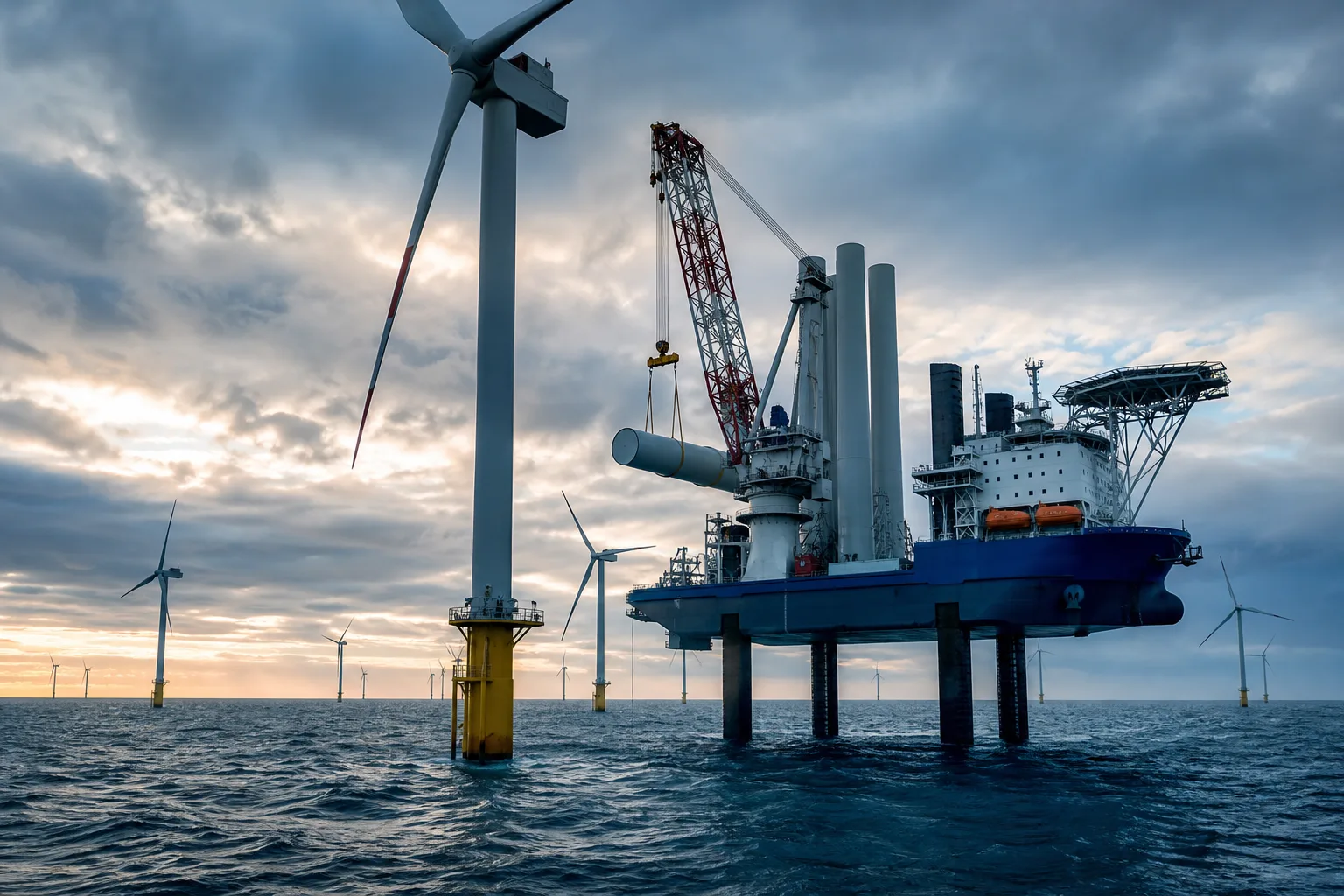
The demand for renewable energy sources remains at the same level, and on some technologies (for example, offshore wind farms) it is increasing every year.
The main reason for the development of alternative energy sources is the reduction in specific capital costs for project implementation and increased efficiency of their use as a result of lowering the weighted average normalized cost of electricity (LCOE). Based on the database of the International Renewable Energy Agency (IRENA), which includes:
- The IREA Renewable Cost Database - includes data on costs and performance for approximately 21,000 projects with a total capacity of around 2,100 GW;
- The IRENA Auction and Power Purchase Agreement (PPA) Database - a database of auctions and power purchase agreements (PPAs), which contains data for approximately 13,500 projects in the field of renewable energy.
Data on the cost of alternative energy sources, their efficiency, and electricity costs were obtained.
Note: The average values presented in this material may differ for different countries and projects depending on the individual features of each project.
Cost of Construction
Compared to land-based wind farms, offshore wind farms have higher specific capital costs for project implementation because:
- Development of offshore wind projects is significantly more expensive and time-consuming than onshore stations. During the realization of projects, it is necessary to collect data on the characteristics of the seabed, as well as obtain permissions and environmental clearances;
- The remoteness of construction sites from coastal lines and required ports significantly increases logistics costs;
- Placement of wind turbines in the sea requires more expensive foundations (the share of foundation costs in offshore wind energy for a "typical" project is about 13% compared to 5% in onshore wind energy);
- The cost of laying underwater cable lines for electrical supply is significantly higher than the construction of cable lines at land-based stations;
- Installation and operation of wind turbines in marine conditions require expensive equipment, thus increasing financial costs.
For 2021 globally about 21.1 GW new capacities were commissioned, out of which about 17 GW was for China.
However, offshore wind energy has the advantage of economies of scale, meaning that some of the above costs are disproportionately higher than those for onshore wind energy. At the same time, more favorable power factors and more stable winds are available to offshore wind energy. Thus, the prospects of offshore wind energy have always been obvious, and in recent years they began to realize their potential. Below is a presentation of new capacities for offshore wind farms.
Global average weighted specific cost of construction of offshore wind power plants increased from approximately $2685 per kW in 2000 to more than $5712 per kW in 2008. Then it was within the range of about $5500 per kW for the period from 2008 to 2015. After 2015, the average specific cost of construction of offshore wind power plants began to decrease rapidly and fell to $2858 per kW in 2021. Below are the specific costs for implementing offshore stations from 2
The increase in specific capital costs that occurred after 2006 can be explained by a number of factors, including:
- Transition to projects in deeper waters and further from the coast, which significantly increased logistics and construction costs;
- Increased complexity of projects required proportional increase in volume of technical solutions project development;
- The offshore wind energy market was still in its infancy, and specialized installation vessels were not yet available, leading to less efficient installation processes;
- Logistics supply chains for WEU components did not exist at that time, and existing supply chains had not been optimized;
- The increase in raw material prices during this period also directly affected the cost of project implementation.
From 2015, there has been a decrease in specific capital costs. The main factors contributing to the trend of reducing unit costs were:
- Decrease in prices for materials used in turbine manufacturing;
- Creation of specialized machines, aggregates for performing transportation, construction and installation of offshore wind turbines;
- Market scaling allowed significant improvement in logistics chains and led to a reduction in delivery costs for turbines;
- Improvement of the wind power plants themselves.
However, due to relatively small market volume (compared with onshore wind and solar photovoltaic modules) specific construction costs of offshore marine stations heavily depend on the specific location and region of installation of WEU. The lowest average specific capital expenditures for construction were recorded in Denmark ($2,289/kW) and China ($2,857/kW), and considering their share in the total volume, global unit costs were significantly dependent on these markets.
However, since 2020, similar trends have been observed that are seen both in onshore wind energy and offshore – an increase in material prices for turbine production. For offshore wind energy, the change in steel prices is particularly sensitive, as the share of steel in a "typical" project of marine wind power reaches 90%. Therefore, it can be expected that in the near future there will be an increase in unit costs by 2-4%.
Efficiency
The range of capacity factors for offshore wind farms is very wide due to differences in meteorological conditions, used technology and configuration of the wind farm. From 2e10 to 2021, the global weighted average capacity factor for newly commissioned offshore wind installations increased from 38% to 39%. Below are changes in CAF for offshore wind energy from 2010 to 2021.
The decrease in the global weighted average capacity factor since 2017 is predominantly, but not entirely, due to an increase in China's share of the world market for wind energy. Projects for offshore wind energy in China are generally coastal and typically characterized by lower wind speeds. In addition, projects in China use less modern technologies in turbine production and design than countries in Europe.
Levelised Cost of Energy
In recent years, growing experience and competition, achievements in the field of wind turbine technology, creation of optimized local and regional supply chains, as well as strong political and regulatory support have led to a sustained increase in more competitive projects in the area of marine wind energy.
From 2010 to 2021, the global weighted average value of levelized cost of electricity for offshore wind energy decreased by 60% from $0.188/kWh to $0.075/kWh.
Share: